
Bitcoin Adoption: Institutional FOMO
How Big Money’s Cautious Entry Could Spark a Bitcoin Supply Squeeze


Chart Pilgrim is now on X! Follow for daily crypto & news updates.
Major institutional investors are entering the Bitcoin market, committing significant capital, though most have only made small initial investments. This signals the start of a race for a scarce asset, where demand is poised to outstrip supply. Today’s article examines recent institutional moves and explores the potential future constraints on Bitcoin’s supply.
Bitcoin overview
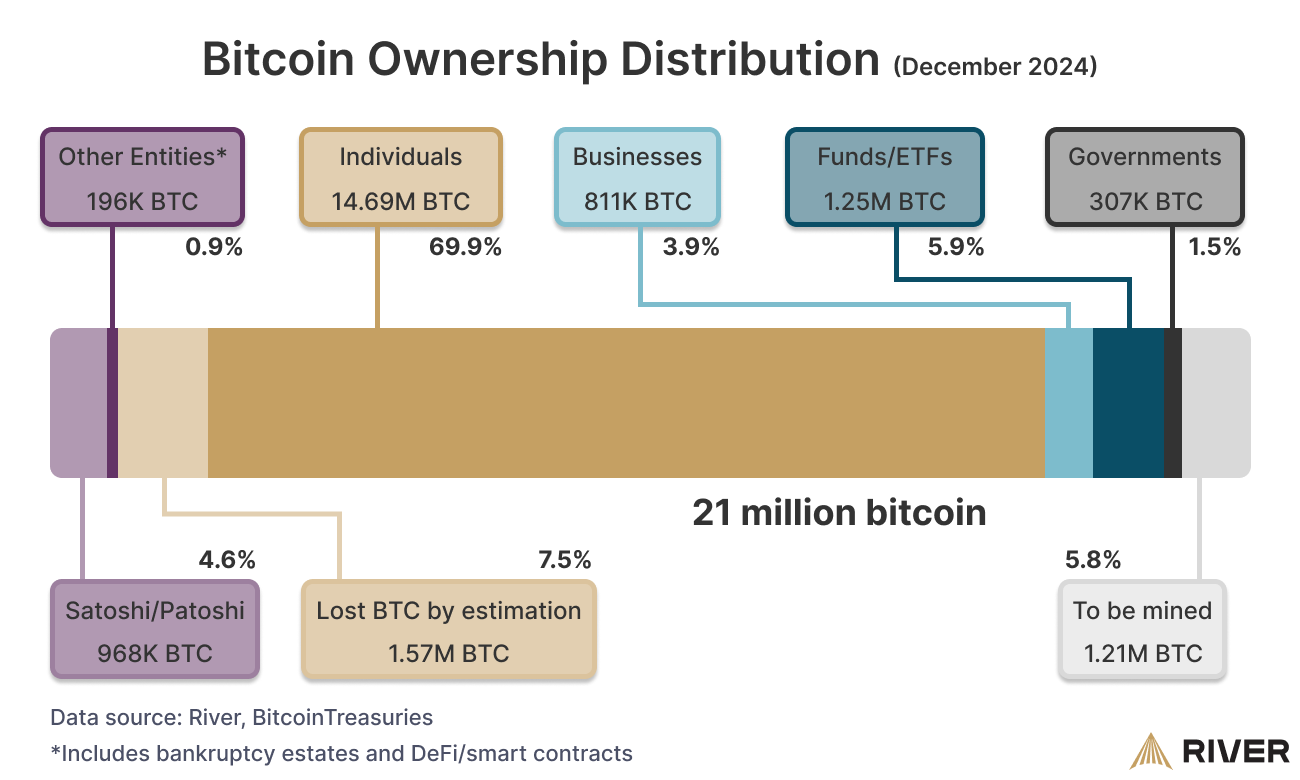
Bitcoin is a scarce digital asset with a fixed supply of 21 million coins. The chart above highlights several key insights:
The majority of Bitcoin holders today are retail investors, many of whom are long-term holders, or “diamond hands,” who bought in at low prices and have no intention of selling.
Businesses, funds, ETFs, and governments collectively own just 11.3% of Bitcoin’s supply—a surprisingly low amount. This time, retail investors have front-run institutions, forcing them to buy at higher prices.
94.2% of all Bitcoin that will ever exist is already in circulation.
Bitcoin ETFs
Institutional investors have been accumulating Bitcoin primarily through ETFs, steadily absorbing supply since their inception in January 2024.
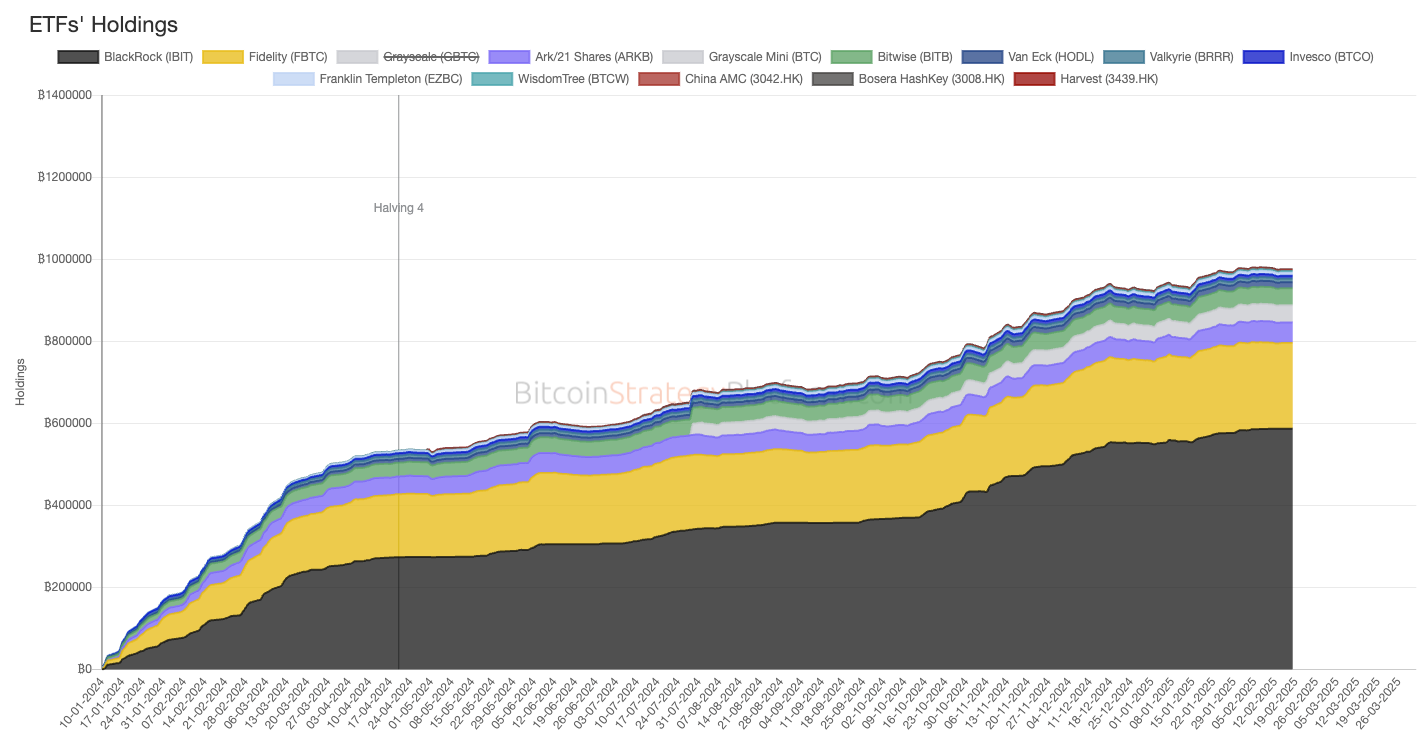
The chart illustrates the rapid pace of institutional adoption. In just one year, major ETF players went from zero to 975,277 Bitcoin, now worth $124.94 billion. Grayscale is excluded since it didn’t launch in January 2024, but including it would add 199,644 Bitcoin. Notably, BlackRock dominates the market, holding 587,050 Bitcoin—more than half of all ETF holdings.
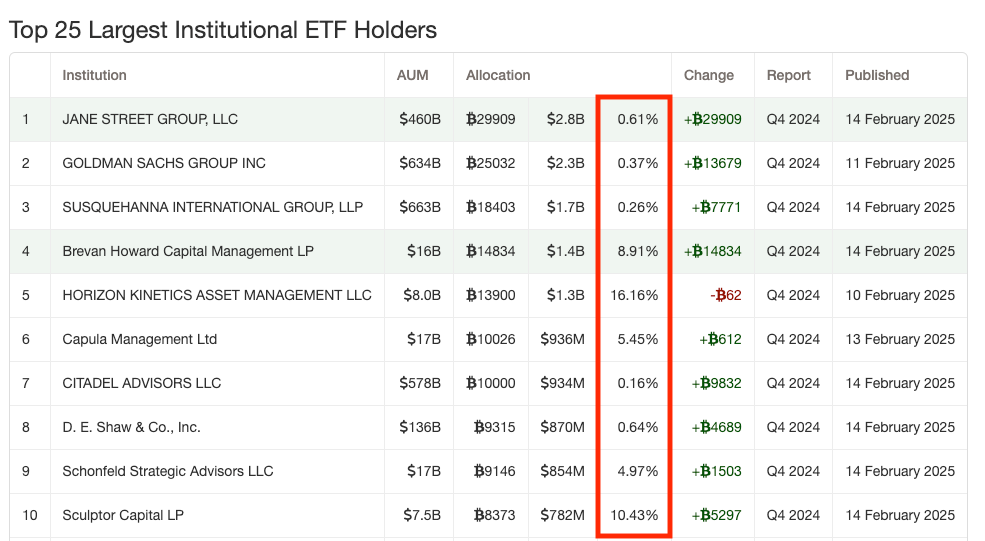
Major institutions are only beginning to test the waters. The red-highlighted column above shows portfolio allocation percentages—Jane Street at 0.61% and Goldman Sachs at 0.37%. If these two alone increased their Bitcoin allocation to 2%, it would drive an additional $16 billion in inflows.
Governments
Besides large institutions, governments are also getting in on the action, with many nations pledging to hold bitcoin on their balance sheet.

Most notably, 32 states in the U.S. have announced plans to establish a Bitcoin strategic reserve for their own states. This is HUGE.

The table above highlights select states adopting Bitcoin and their progress in the legislative approval process, with many nearing the final stages. However, none have signed it into law yet, indicating that the surge in demand from these entities is still on the horizon.

Beyond the U.S., El Salvador has further expanded its Bitcoin reserves, adding 12 BTC in a single day, bringing its total holdings to 6,068 BTC, now valued at over $554 million.
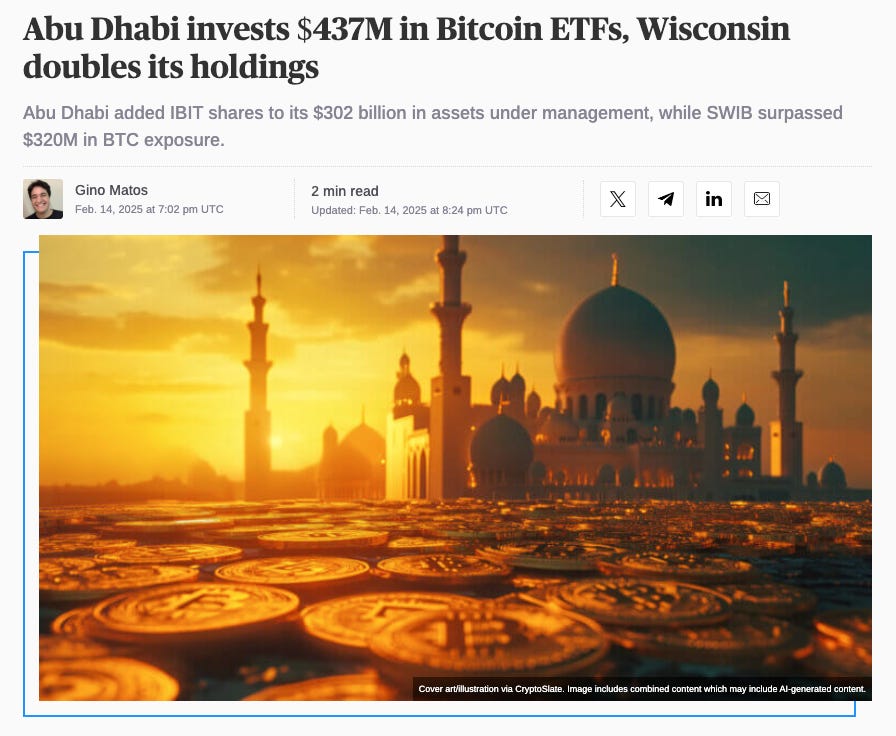
Abu Dhabi’s Mubadala Investment Company, a sovereign wealth fund, has disclosed holdings of 8.2 million shares of IBIT, valued at nearly $437 million. According to its official website, this represents just 0.14% of its $302 billion AUM.
Pension Funds
The Overton window is shifting, positioning Bitcoin as a more accepted asset class, with pension funds increasingly investing in it. Notable examples include:
State of Wisconsin Investment Board (SWIB): Increased its holdings in BlackRock's iShares Bitcoin Trust to over 6 million shares, valued at approximately $321 million.
State of Michigan Retirement System: Allocated $6.6 million to Bitcoin investments.
Unnamed UK Pension Fund: Invested 3% of its £50 million portfolio, equating to £1.5 million, into Bitcoin.
These investments reflect a growing trend among pension funds globally to explore cryptocurrency as part of their diversification strategies.
Supply shock
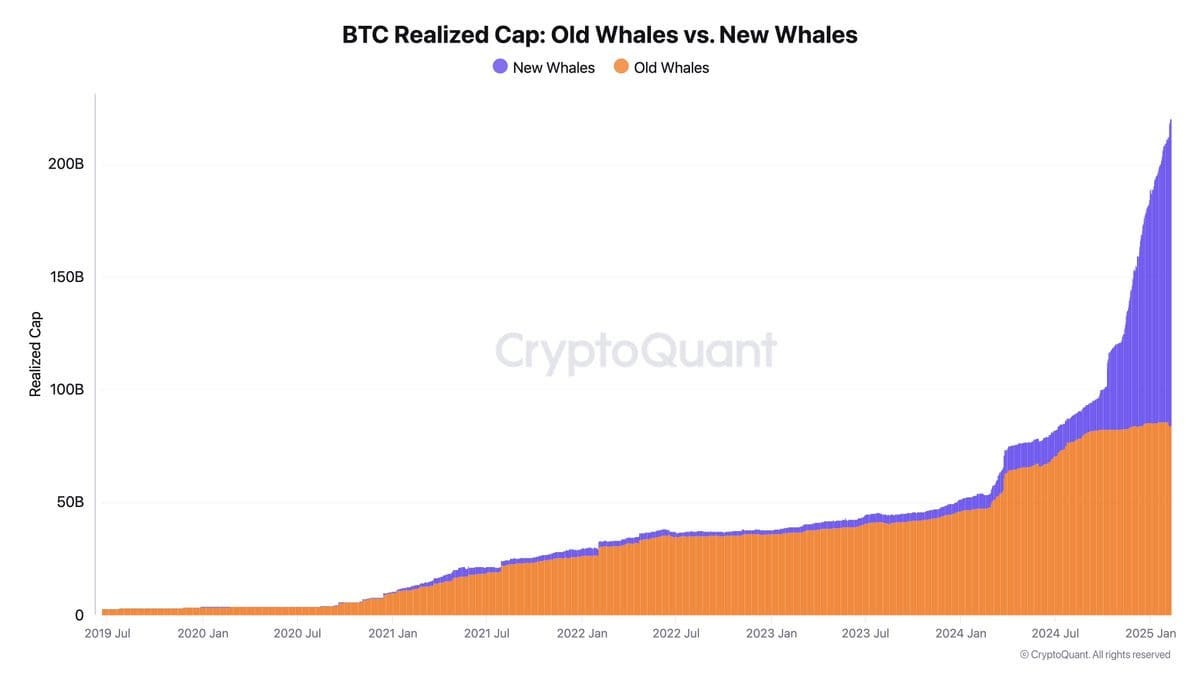
Many companies, institutions, and governments are actively seeking Bitcoin exposure in their portfolios. The chart shows that new Bitcoin whales—institutions and large investors—are accumulating Bitcoin at an accelerating pace, while long-term holders are maintaining their positions without adding or selling.
However, a point will come when supply becomes scarce.
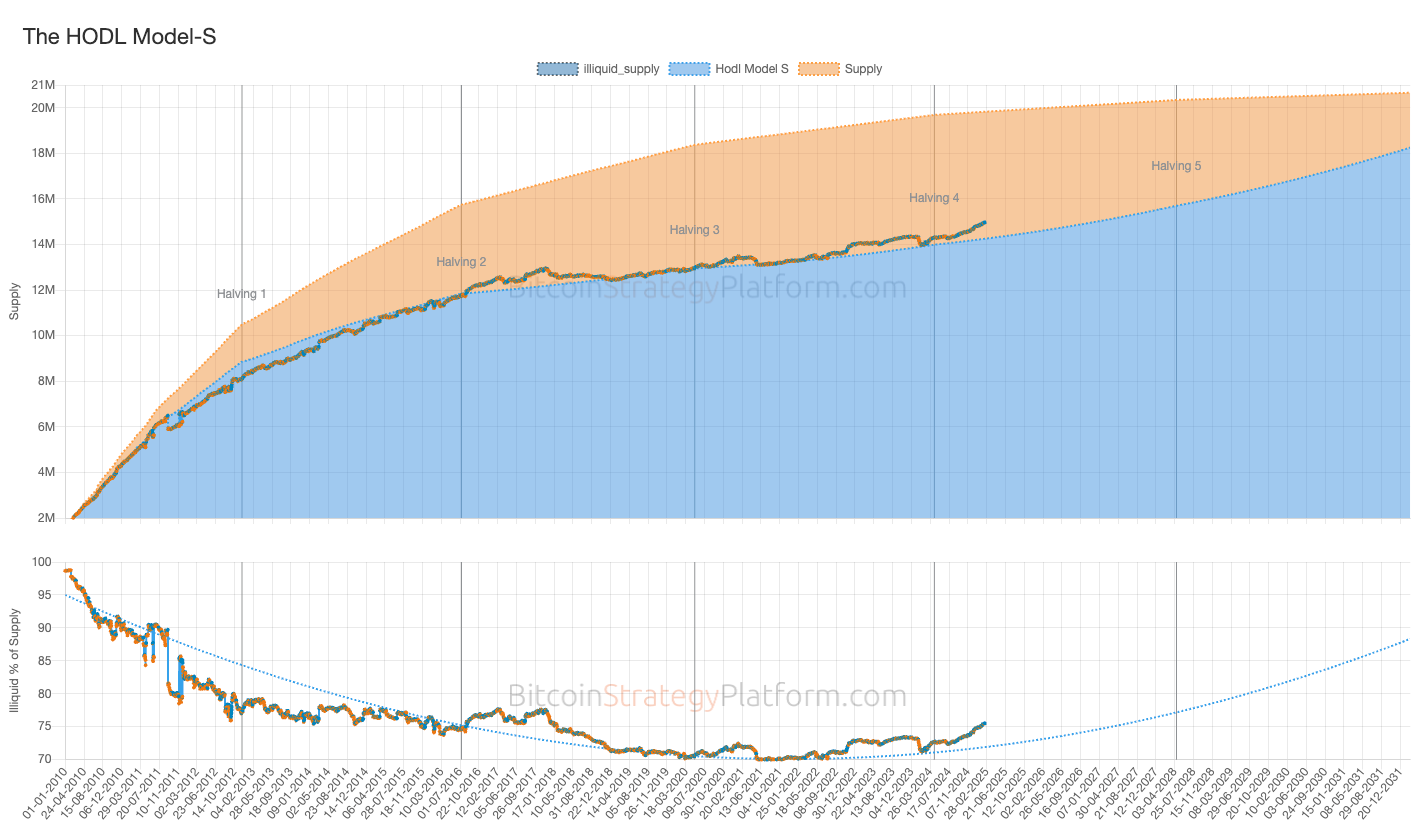
The chart above illustrates Bitcoin supply following an S-curve adoption pattern. The orange area represents liquid supply, while the blue area represents illiquid supply—either held by steadfast investors or lost permanently. Over time, the orange area shrinks, signaling a future where liquid Bitcoin becomes increasingly scarce.
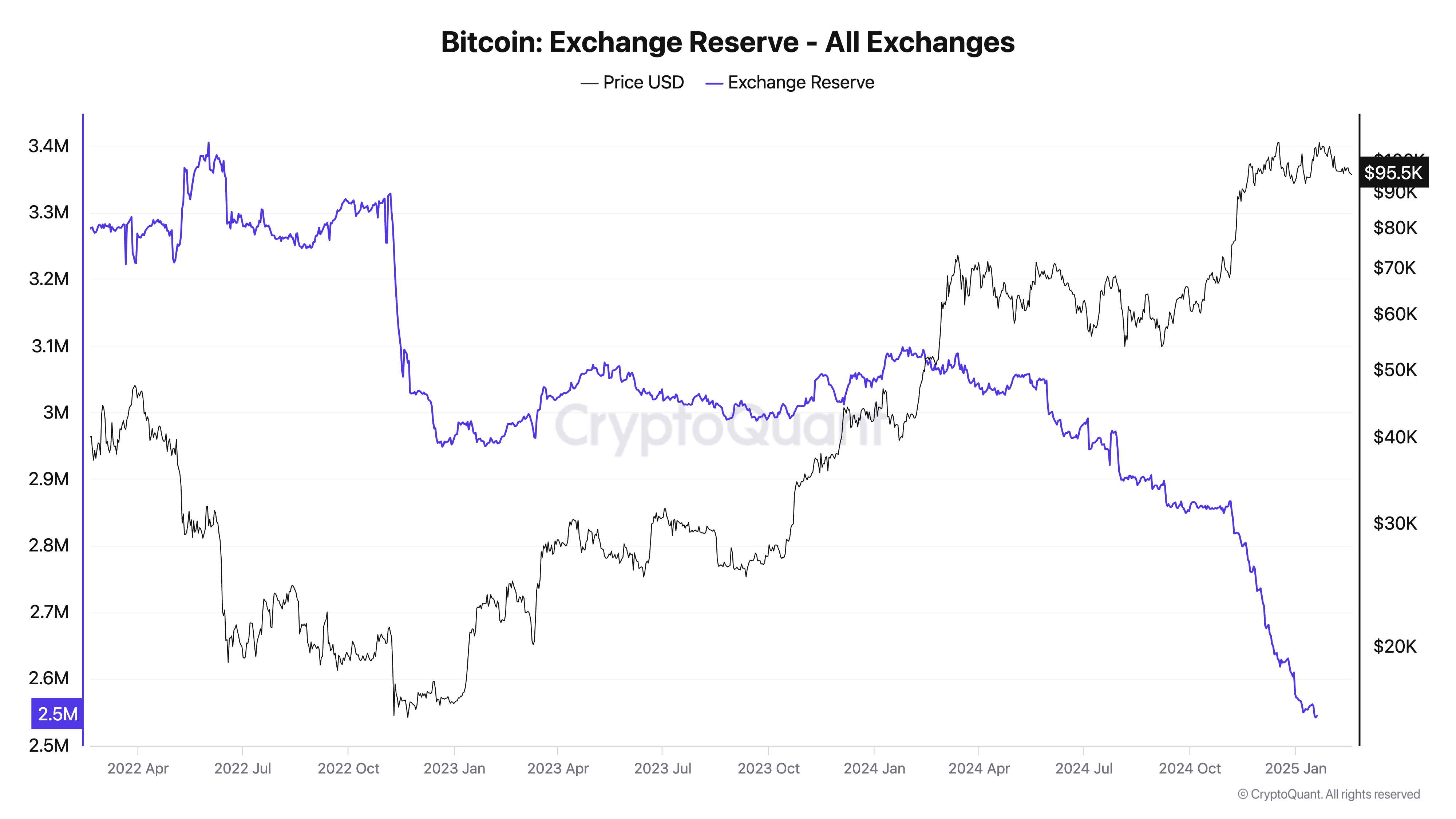
If you're skeptical of projections, there's no need to worry—the scarcity is already unfolding on exchanges. The chart above tracks the number of Bitcoins held on platforms like Binance, Coinbase, and Crypto.com etc. Over the past three years, exchange reserves (the blue line) have been steadily declining.
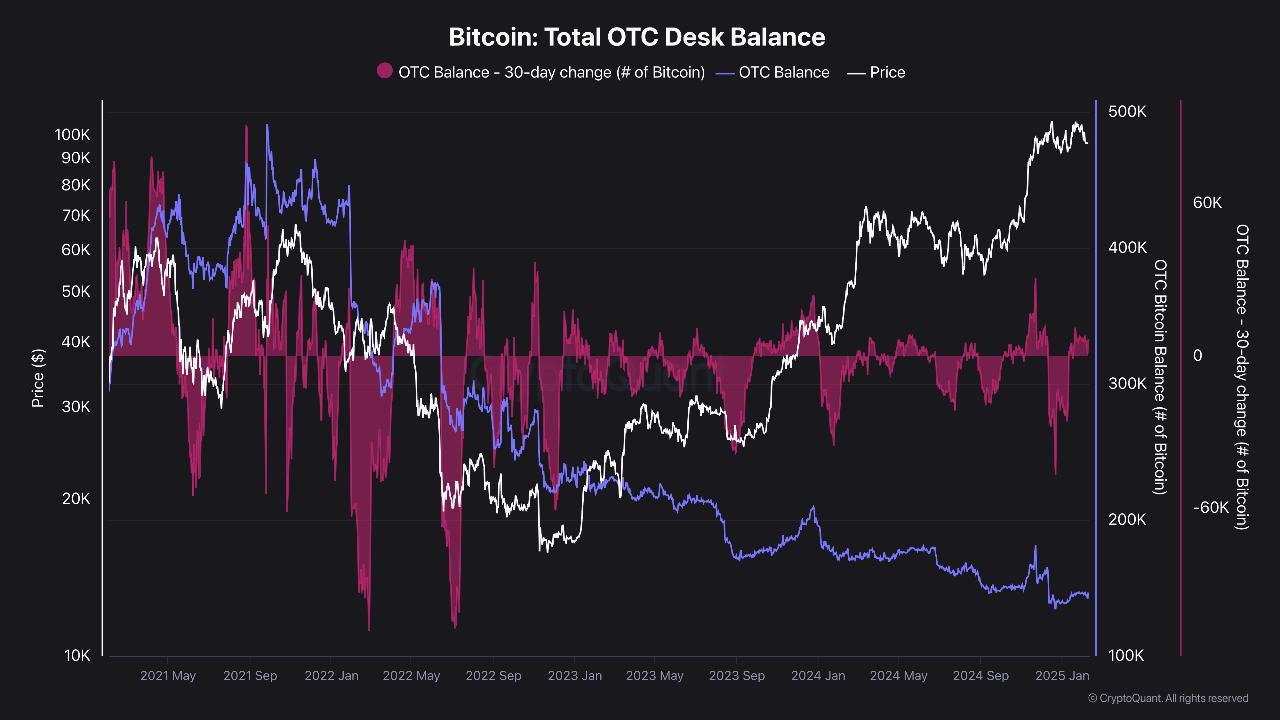
The same trend holds for Bitcoin OTC (over-the-counter) desk balances. The blue line shows a steady decline, indicating decreasing supply in OTC markets as well.
Conclusion
Bitcoin’s adoption by institutions, governments, and pension funds is accelerating, yet supply remains constrained. With 94.2% of all Bitcoin already in circulation and long-term holders reluctant to sell, the available supply is shrinking. Institutional investors are still in the early stages of allocation, and as more capital flows in—whether through ETFs, corporate treasuries, or government reserves—competition for Bitcoin will only intensify.
The declining exchange and OTC reserves further underscore this growing scarcity. As demand continues to rise while liquid supply diminishes, Bitcoin’s status as a scarce digital asset becomes more apparent. Those who act early may have a significant advantage before the supply squeeze becomes apparent. But this trend will unfold gradually over the next decade, with significant volatility along the way.
Disclaimer: The content on this Substack is for informational and educational purposes only and should not be considered financial advice. Nothing here constitutes investment recommendations, and you should always conduct your own research or consult a professional before making financial decisions.